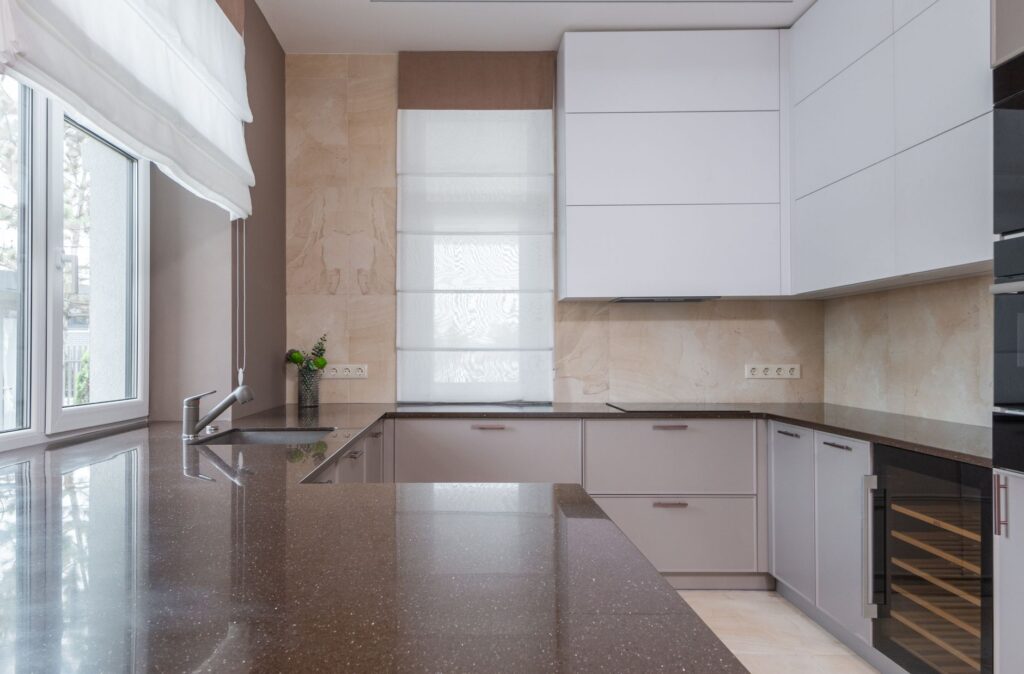
There is no single best kitchen worktop material for every home. The right choice depends on how you cook, how much upkeep you will accept and what look you want. This guide explains what each common option is like to live with, so you can narrow the list for your own kitchen.
How to judge the best kitchen worktop material
Start with five questions. How hot will the surface get? How much knocking, cutting and scraping will it take? Will you wipe spills quickly, or leave them? How much time will you give to care? What can you spend on the material and the fitting?
Answer these honestly and the field narrows quickly. A busy family that cooks every day needs a different surface from a couple who mainly use the kettle.
Looks and finishes
Natural stones such as granite and marble give each slab its own pattern. Engineered quartz offers a more even look, with colours that repeat from slab to slab. Laminate copies stone, wood and plain colours, and it comes in a wide range at a lower price.
The finish changes the feel as much as the colour. A polished surface looks glossy, but it can show fine marks more readily. A honed or matt surface feels softer and hides small scratches better. View full-size samples in your own kitchen, because daylight and artificial light make colours look different.
Durability: heat, scratches, stains and water
Heat is where materials differ most. Granite is generally regarded as heat tolerant, and many people set hot pans on it without trouble. Engineered quartz is made from crushed stone bound with resin, and it is less heat resistant than most granite. Manufacturers advise using a trivet for hot pans. Laminate and wood are generally more sensitive to heat than stone, so use a mat with them.
Scratches and chips depend on hardness and finish. Granite and quartz resist scratching well, although a gritty pan base can still mark them. Wood dents and scores more easily, but it can be sanded and oiled to recover. Laminate can chip at the edges. However, that damage is usually difficult to hide.
Stains depend on whether the surface is porous and sealed. Unsealed granite and marble can absorb oil, wine and coffee. Quartz is non-porous and rarely stains. Solid wood needs regular oiling to keep water and stains out. Practice varies between fabricators, so ask your fitter what sealing and maintenance they recommend.
Hygiene and everyday care
Non-porous surfaces are the easiest to keep clean. Quartz, stainless steel and well-sealed stone can be wiped with warm water and a mild cleaner. Avoid harsh abrasives and strong acids, because they can dull the finish.
Wood, however, needs more attention. Water left around the sink or the joins can cause swelling, so dry spills quickly and oil the surface on the schedule the maker recommends. Laminate should be wiped rather than soaked, because water can get under the seams and lift the edges. Whatever you choose, seal the joins by the sink and hob to keep water out.
Fitting, weight and support
Stone and quartz worktops are heavy. Check that your cabinets and wall fixings can carry the load. Most stone worktops are made to measure by a fabricator who templates your units first. Laminate is lighter, and wood is lighter than stone, but both still need level, solid support along the full run.
Sinks, hobs and taps are cut into the worktop, so joins need careful placement. Ask how many joins your layout needs and where they will fall. Each join is a point to seal and maintain, so fewer is usually better.
Likely cost
Costs vary widely, and this guide does not quote prices. The total depends on the material, its thickness, the edge profile, the finish, the length and shape of the run, the sink and hob cut-outs, removal of the old top and local labour rates. Get itemised quotes from at least two fitters and ask what each one includes. Our guide to kitchen worktop costs in the UK explains what affects the total.
Pros and cons at a glance
- Granite: hard, heat tolerant and widely available. It can stain unless sealed, and it is heavy.
- Quartz: low maintenance, non-porous and even in colour. It is less heat tolerant than granite, and it costs more than laminate.
- Solid wood: warm and easy to repair. It needs regular oiling and must be kept dry around the sink.
- Laminate: the lowest cost and a wide range of looks. It is less durable, and damaged edges are hard to repair.
- Stainless steel: hygienic and practical for heavy cooking. It shows marks and can be noisy.
Who each material suits
Granite suits people who want a hard-wearing natural stone and are willing to seal it. Quartz suits households that want low maintenance and an even colour, and that will use trivets. Solid wood suits a warm, traditional kitchen where the owner enjoys regular oiling. Laminate suits a tight budget. Stainless steel suits keen cooks who want a practical, hygienic surface.
The best choice is the material that matches your habits. Decide how much care you will give, how hot you cook, and what you can spend. Then compare samples in your own light before you order. For more detail, see our guides to granite worktops and quartz worktops.