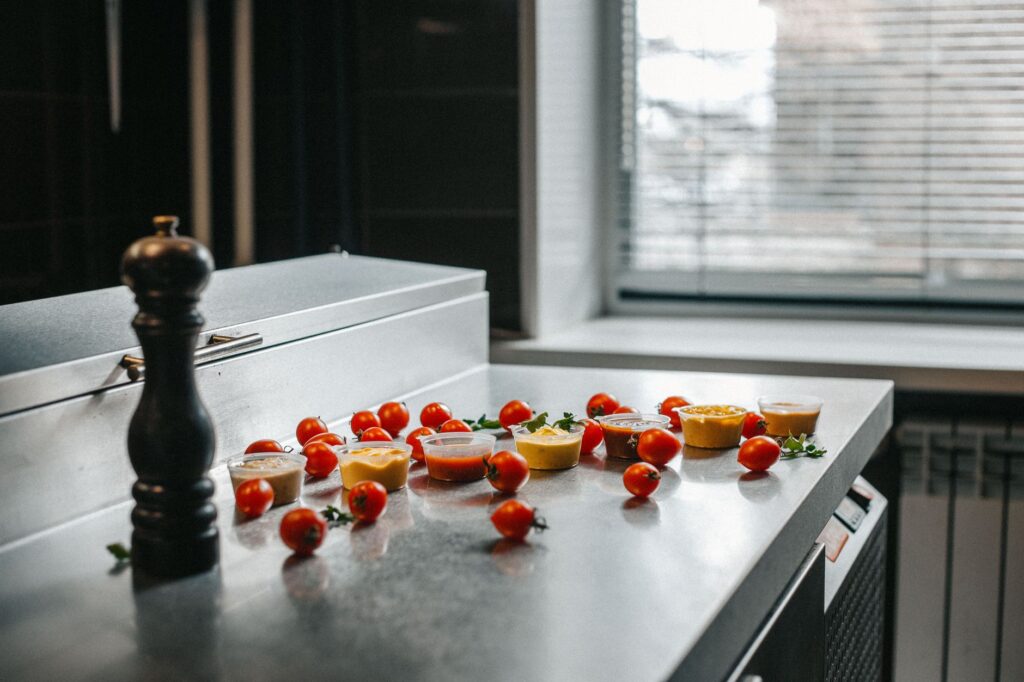
Stainless steel worktops are made from sheets or blocks of stainless steel, a metal alloy that resists rust in everyday use. They are common in professional kitchens and utility rooms. They also suit homes that want a clean, modern look. This article covers daily life with the material. It also explains fitting, cost and who it suits.
What stainless steel worktops are and how they look
Stainless steel is an alloy of iron and chromium. Wikipedia’s entry on stainless steel explains that the metal needs at least 10.5% chromium to resist corrosion. The chromium forms a very thin surface film that blocks oxygen from reaching the metal. This is why the surface stays resistant to rust in ordinary kitchen use.
The look depends mostly on the finish. A brushed or satin finish is the most common choice for worktops. It has a fine grain, looks understated and hides light scratches better than a polished surface. A mirror-polished finish looks sharp but shows fingerprints, water spots and marks much more clearly. Grades of steel also differ, so ask the supplier which one is used and what finish is available.
Durability: heat, scratches, stains and water
The metal itself tolerates very high temperatures, so a hot pan will not harm the steel. The rest of the installation is less tolerant, though. Adhesives, sealants and any wood or laminate nearby may react to heat. Use a trivet for dishes straight from the oven. Ask your fitter how the area around the hob has been finished.
Stainless steel is hard-wearing, but it can scratch and dent. Heavy pans dragged across the surface leave marks, and a dropped tin or pan can dent an edge. Brushed finishes are forgiving with normal use. Polished finishes need more attention.
Stains from wine, coffee or oil do not soak in. The surface is metal, not unsealed stone or wood. Water spots and limescale can still build up around the tap and sink, so wipe these areas dry. Salt, bleach and chloride-based cleaners left on the surface can cause pitting, so rinse them off promptly.
Hygiene and everyday care
A stainless steel worktop is easy to keep clean. Wash it with warm water and a little washing-up liquid, rinse, then dry it with a soft microfibre cloth. On a brushed finish, wipe in the direction of the grain. Use a cleaner made for stainless steel if you want a polish, and follow the manufacturer’s instructions.
Avoid steel wool, abrasive pads and harsh powders, because they scratch the finish. Use a cutting board, since knife marks show easily and make the surface harder to keep looking clean. Its smooth surface is one reason stainless steel is used in food preparation areas. Good habits still matter at home.
Fitting, weight and support
Stainless steel worktops are fabricated from sheet metal, which is then fitted over a supported base. Thickness and weight vary between suppliers. Check the specification and confirm that your base units are level and strong enough. Long runs need a join. It should be welded and ground smooth, so the line is hard to see and easy to wipe.
Many fabricators can form an integrated sink from the same sheet, which gives a seamless look. Thin steel can be noisy, though. Pans, cutlery and dropped items can ring or drum on the surface, so ask about sound-deadening underlay. Fitting is specialist work, and most people use a professional template and installation service.
Likely cost
Prices vary widely. The total depends on the thickness, finish, length of the run and cut-outs. It also depends on the fitter’s rates and where you live. This article does not give figures, because prices change and differ between suppliers and regions. For a broader look at how costs are built up, see kitchen worktop costs in the UK.
When you get quotes, check each one covers the template, sink, fitting and removal of your old worktop. Comparing like with like makes the differences clear.
Pros and cons of stainless steel worktops
- Pro: a smooth, non-porous surface that is simple to wipe clean.
- Pro: resistant to rust and corrosion in normal kitchen use.
- Pro: a clean, contemporary look, and an integrated sink can be seamless.
- Con: scratches and dents show, and polished finishes show marks more.
- Con: thin steel can be noisy under pans and cutlery.
- Con: salt, bleach and some cleaners can cause pitting if left on the surface.
- Con: it can look cold and industrial, which not everyone likes.
Who stainless steel worktops suit
Stainless steel suits people who cook often, want an easy-to-clean surface and like a contemporary or professional look. It also works well in utility rooms and in homes where a hygienic finish matters. Owners who accept some wear, and who clean with care, usually find a steel surface satisfying over time.
It is less suitable if you want a warm, natural look or a surface that hides every mark. If you prefer a stone look, granite worktops and quartz worktops are the usual alternatives. To compare the main options side by side, read our guide to the best kitchen worktop material.