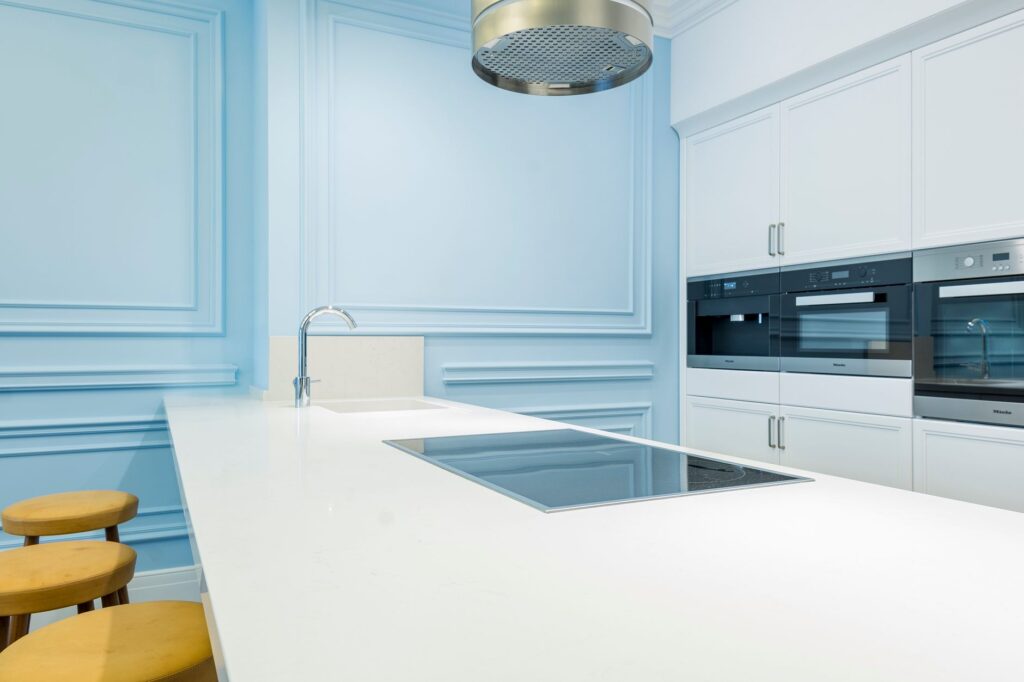
Quartz worktops are engineered stone, made from crushed quartz bound with resin and pressed into slabs. They suit UK kitchens that need a hard-wearing, low-maintenance surface in a wide range of colours. They are not perfect, though. Heat, weight and cutting deserve as much thought as the look, so here is an honest guide to living with them.
What a quartz worktop is
Quartz is a type of engineered stone, sometimes sold under brand names. Manufacturers mix crushed stone with a polyester resin, then compact the mix under vacuum and heat to form a slab. Crushed quartz, a form of silica, makes up most of the material, usually around 90 to 93 per cent by weight. The Wikipedia entry on engineered stone gives these figures. Because the slabs are manufactured, colour and pattern vary far less than with natural stone.
Looks and finishes
Quartz worktops come in a wide range of colours, from plain whites and greys to patterns that imitate marble or concrete. The finish changes how the surface looks and feels. A polished finish reflects light, but it shows marks more readily. A matt or honed finish tends to hide fingerprints and fine scratches, and many people prefer its softer look.
Edges matter too. Common profiles include square, bullnose and ogee, and each changes the feel of the worktop as well as its appearance. Ask to see full-size samples in your own kitchen light. A small sample can look quite different across a long run.
Durability: heat, scratches, stains and water
Quartz is hard and non-porous, which gives it good resistance to stains and water. Most manufacturers say it needs no sealing, unlike many natural stones. Water and everyday spills such as tea or wine usually wipe away, though it is still best to clear them promptly.
Heat is the weak point. The resin binder can scorch, discolour or, in extreme cases, be damaged by a hot pan placed directly on the surface. Manufacturers generally advise using trivets or mats for hot cookware. If you want to lift pans straight from the hob onto the worktop every day, quartz may not suit you.
Scratches are less likely than with laminate, but quartz is not indestructible. Grit trapped under a pan can mark it, and abrasive cleaners or scouring pads can dull the finish. Use a chopping board every time. Strong chemicals, such as some oven cleaners or bleach, can also affect the surface, so check the manufacturer’s care guide first.
Hygiene and everyday care
Quartz is non-porous, so it does not soak up liquids. That leaves less scope for bacteria to lodge in it. Daily care is simple: wipe with warm water and a mild washing-up liquid, then dry. Avoid abrasive pads. Pay attention to the joints around the sink and hob, where grime collects. Check the silicone sealant there over time.
How quartz worktops are fitted
Fitting starts with templating. The fabricator measures the kitchen once the base units are level and fixed, then cuts the slabs to size in a workshop. Sink and hob cut-outs are usually made at this stage. The worktop is then fixed to the units and joined where there is more than one piece.
Weight is the main practical point. Quartz is heavy, so the base units must be strong, level and fully supported. Ask your installer to confirm the cabinets can take the load. Long runs, islands and overhanging breakfast bars often need extra support. Seams are normally visible, so plan where they fall, ideally away from the sink and hob.
Cutting engineered stone creates fine silica dust, which can cause silicosis if breathed in over time. Reputable fabricators control it with water and extraction. Do not cut quartz yourself with a dry disc or grinder, and ask any fabricator how they manage dust before you book.
Likely cost
Prices vary widely with brand, thickness, colour, edge profile and the amount of cutting and sink work needed. They also vary by region and by installer, so no single figure applies. Quartz generally costs more than laminate. Get at least three written quotes. Each should show the material, templating, fitting, sink cut-outs and removal of the old worktop, so you compare like with like. For a wider view of budgets, see our guide to kitchen worktop costs in the UK.
Pros and cons
- Pro: low maintenance, and most brands need no sealing.
- Pro: non-porous, so it resists stains and water well.
- Pro: consistent colour and pattern, with a wide range to choose from.
- Con: heat can damage the resin, so trivets are essential.
- Con: heavy, and it needs strong, level base units.
- Con: chips can be hard to repair invisibly, and cutting needs proper dust control.
- Con: usually costs more than laminate.
Who quartz suits
Quartz suits busy family kitchens where low upkeep matters more than natural character. It works well for anyone who wants a consistent colour, a modern look and few maintenance tasks. It is less suitable if you often cook with hot pans on the surface. Quartz also suits less well if you want the variation and patina of natural stone, or plan to chop on the worktop itself. Compare it with granite and other materials before you decide. For most UK homes, quartz is a sound choice, provided you respect its limits on heat and weight.