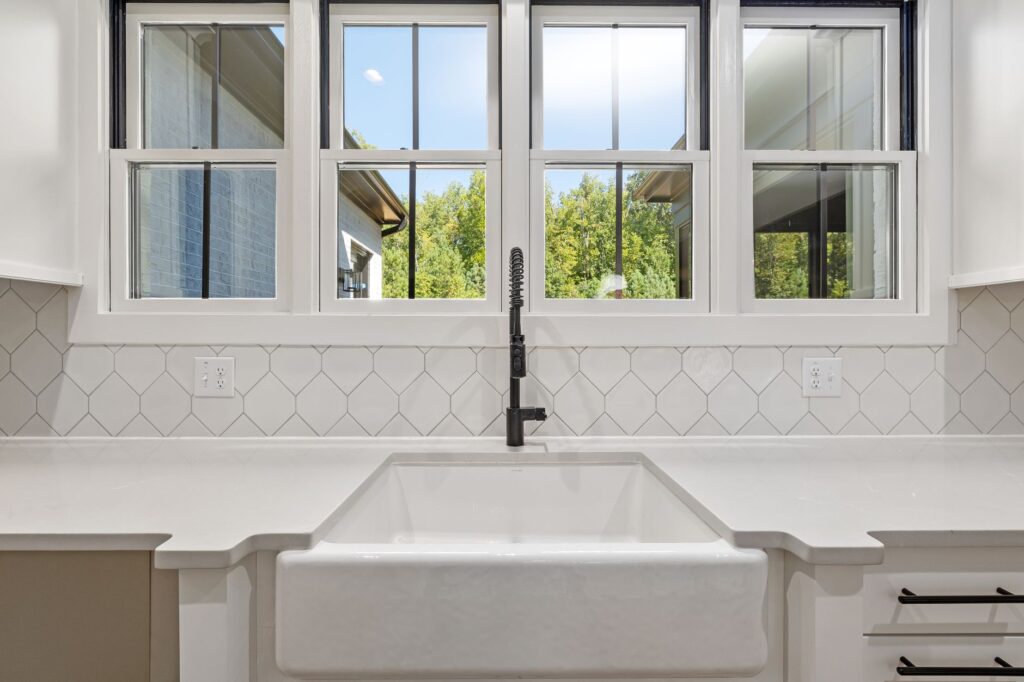
Solid surface worktops are made from an acrylic polymer mixed with a mineral filler, and they are moulded into sheets that can be joined almost invisibly. They suit UK kitchens that want a smooth, seamless work surface. This guide explains what the material is, how it looks, how well it copes with daily use, how to care for it, how it is fitted and who it suits.
What solid surface worktops are made from
Solid surface is a man-made material. Most products are an acrylic polymer combined with a mineral filler, often alumina trihydrate, which is derived from bauxite ore. The mix is cast into sheets of even colour and thickness, so the colour runs right through the material instead of sitting on a surface layer. Corian, the best-known brand, is a useful example of this type of product.
Because the colour runs through, minor damage can be sanded out rather than covered over. Sheets can be cut, shaped and bonded together with a specialist adhesive, so the seams are hard to see. Sinks can often be made from the same material and fitted into the same piece, which leaves no sink rim to clean around.
Looks and finishes
Solid surface comes in plain colours, subtle speckles and designs that imitate stone. The surface is uniform, so you will not get the natural veining of granite or marble. A matt or satin finish is the most common choice and hides fine marks well. A glossier finish looks sharper, but it shows scratches and water spots more readily.
The range of colours depends on the brand and supplier. Ask for large offcuts or full-size samples and view them in your own kitchen. Lighting changes how a colour looks, so a sample that seems right in a showroom can look different at home.
Durability: heat, scratches, stains and water
When it is properly finished, solid surface is non-porous. This means spills of wine, coffee or oil usually wipe away rather than soaking in, although strong dyes or long contact can still leave a mark. Water is not a problem on the surface itself. Joins and sink edges need more attention, so check that seams are well sealed when the worktop is fitted.
Heat is the main weakness. The material tolerates warm pans, but excessive heat can damage it. Corian’s own care advice recommends trivets in kitchens. A hot pan set straight on the surface can leave a dull or permanent mark, so a trivet is the sensible habit. Hot dishes from the oven should never go directly onto the worktop.
Scratches are the most common complaint. Knife cuts and grit from pans can mark the surface. Light scratches can usually be sanded and buffed back to the original finish. Deeper damage may need a larger repair, and the cost depends on the job and the fabricator you use.
Hygiene and everyday care
The surface is smooth and has no grout lines, so it is easy to wipe clean. There are fewer places where food and bacteria can collect than on tiled or grouted surfaces. Warm water and a mild liquid detergent are usually enough for daily cleaning. Avoid abrasive pads, bleach-heavy products and harsh solvents, because they can dull the finish.
Product recommendations differ between brands, so check the care guide from your supplier. Dry the surface after use where you can. Standing water left for long periods can leave marks around sinks and joins.
Fitting, weight and support
Solid surface is usually made to measure. A fabricator visits the home, templates the room, cuts the pieces, bonds the joins and fits them in place. The material is heavier than laminate, so the base units must be level and fully supported. A long run with weak support underneath can flex over time, so a good fitter will check the support before fixing anything.
Seam position matters for both looks and strength. Discuss where the joins will fall before work starts, especially around the hob and sink. Fitting is a specialist job, and the quality of the joins and finishing depends heavily on the installer. Choose a fabricator with experience of the brand you want, and ask for a written guarantee that covers both the material and the workmanship.
Likely cost
This guide does not quote prices for solid surface worktops. Costs vary by brand, colour, thickness, the length and shape of the run, the sink and edge work, and the fabricator’s rates. Get at least two written quotes that show the material, fitting and any sink separately, so you can compare them fairly. For a wider comparison of worktop costs, see our guide to kitchen worktop costs in the UK.
Pros and cons
The advantages are clear:
- A seamless, smooth surface with no grout lines
- Light scratches and minor damage can often be sanded out
- An integrated sink is possible, with no rim to clean around
- A wide range of plain colours and subtle patterns
The drawbacks are also real:
- Heat can mark or damage the surface, so trivets are needed
- The uniform surface lacks the natural character of stone or wood
- Fitting depends on a skilled fabricator, and quality varies
- Repairs need a specialist and can be costly
Who solid surface worktops suit
Solid surface suits homeowners who want a clean, seamless look and are happy to use trivets and wipe up spills promptly. It also suits kitchens where an integrated sink is a priority. It is less suited to people who cook with very hot pans every day, or who want the look of natural veined stone. For those needs, granite or quartz may be a better fit. If you want a warmer feel, solid wood has different maintenance needs but a very different character.