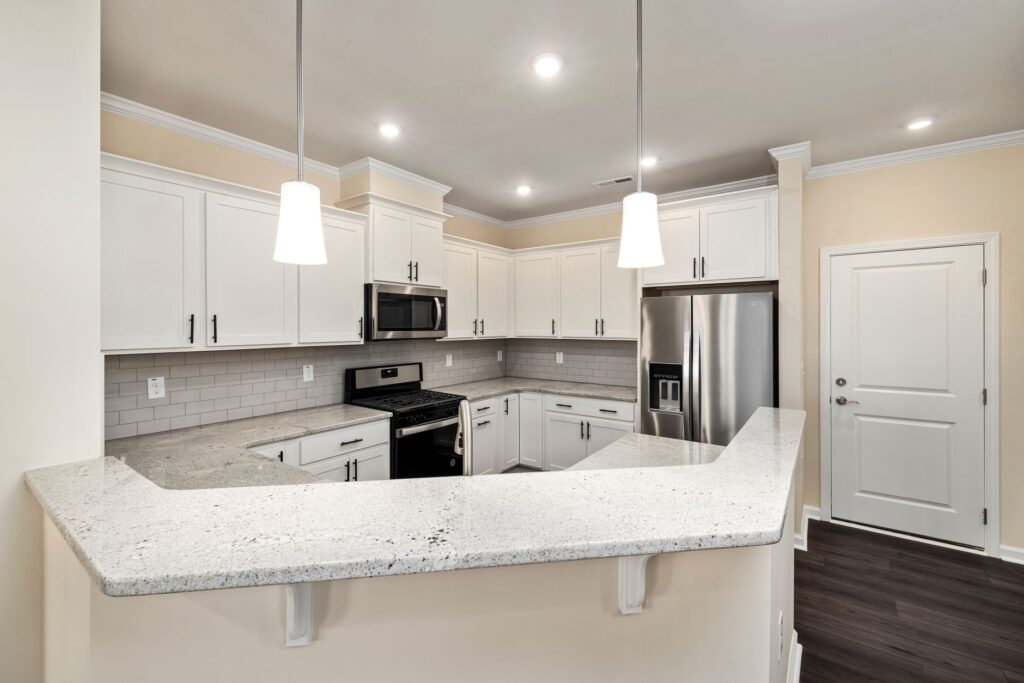
Kitchen worktop costs in the UK vary far more than most people expect. The material is only one part of the bill. Thickness, finish, the length of the run, the edge profile, sink and hob cut-outs, fitting and removal of the old top all add to the total. This guide explains what drives those costs, how the main materials compare, and how to judge quotes fairly. It does not quote prices, because they change and differ between suppliers and regions.
What drives kitchen worktop costs
Several factors set the price of a worktop. The material is the biggest single choice. Rarer natural stones usually cost more than common ones, and engineered products often sit in the middle. Thickness matters too, because a thicker slab uses more material and can need more labour. The finish, whether polished, honed or textured, can also change the price.
The size and shape of the job matter just as much. A long run cut from one piece costs differently from several short pieces with joins. Every sink, hob and tap cut-out adds time. A layout with corners, an island or an overhang needs more measuring and cutting. Edge profiles change the price as well, since a plain square edge takes less work than a moulded or bevelled one.
Material by material: what you pay for
Laminate is generally the lowest-cost option and is widely available, so it is often chosen on a tight budget. Solid wood usually costs more than laminate, and the price rises for hardwoods and thicker boards. Stainless steel is often priced above laminate and wood, and it is commonly made to measure in a workshop.
Granite and quartz sit at the higher end for most homes. Granite is a natural igneous rock, as Wikipedia’s entry on granite explains, so each slab is quarried and cut, and that affects its price. Natural stones such as marble often cost more still. Concrete is usually made to order, which makes its price harder to predict. These are general patterns rather than fixed rates, so get a quote for your own kitchen.
The costs people forget
The worktop itself is only one line on an invoice. Many quotes leave out costs that appear later. Check whether your quote includes the template visit, the measuring step that fabricators use before cutting. Ask whether the fitter removes and disposes of the old worktop, and whether they reconnect the sink and tap.
Other items are easy to overlook. Upstands and splashbacks may be extra. Sealing a natural stone is sometimes charged separately. Base units may need adjusting if they are not level. Ask whether the quote includes VAT, so you can compare the totals on the same basis.
How to compare quotes fairly
Quotes are only useful when they describe the same job. Ask each fabricator to price the same material, thickness, finish and edge profile. Then ask for a written breakdown covering the stone or board, the template, cut-outs, fitting, sealing and removal. A single total hides the differences that matter.
Ask for samples and check them in daylight and under your kitchen lights. Ask where any joins will sit. If one quote is much lower than the others, ask what it leaves out. Quotes usually carry a validity date, so check it before you agree.
Pros and cons of spending more or less
- Pro: a lower-cost material keeps the budget under control and can look good with careful choice.
- Pro: a higher-cost stone can last many years with proper care and sealing.
- Con: the cheapest option is not always the cheapest over time if it needs replacing sooner.
- Con: a high price does not guarantee a better fit or finish, so the fabricator matters.
- Con: quotes differ widely, which makes comparison hard without a like-for-like brief.
Who this guide helps most
This guide suits homeowners who are planning a kitchen update and want to understand the bill before they meet a fabricator. It is also useful for anyone who has received quotes that look far apart. If your budget is fixed, decide on the material first, then compare fabricators on the same specification.
If you are still choosing a material, read the laminate worktops guide alongside the granite worktops guide to see the trade-offs. For a different balance of looks and upkeep, see the quartz worktops guide, or the solid wood worktops guide if you want warmth and a traditional look.