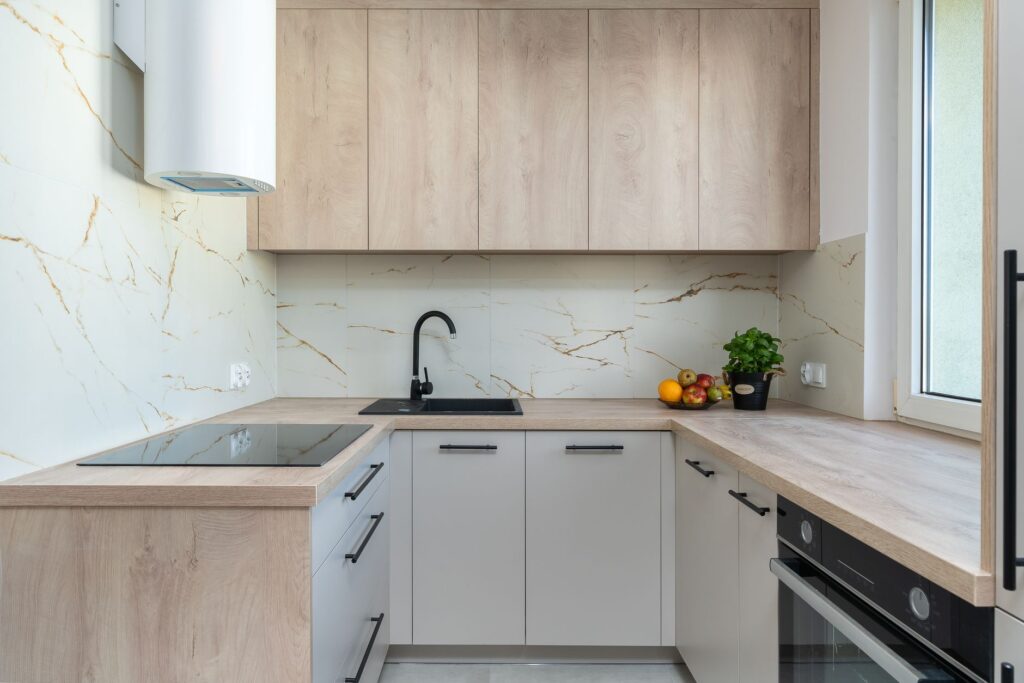
Laminate worktops are one of the most common choices in UK kitchens, and for good reason. They are affordable, come in a wide range of colours and patterns, and are simple to keep clean. They also have real limits, mainly around water and heat, so it is worth knowing what you are buying before you choose.
What laminate worktops are made of
A laminate worktop has a core board with a decorative surface bonded to the top. The core is usually chipboard or medium-density fibreboard (MDF). The surface is usually high-pressure laminate. It is made from layers of paper soaked in resin, pressed under heat and pressure into one hard sheet. The Wikipedia entry on laminate describes how these decorative high-pressure layers are made.
Post-formed laminate worktops have a moulded front edge with no visible joint along it. This gives a smoother look, but these tops only come in standard lengths and profiles.
Looks and finishes
Manufacturers offer a very wide range of finishes: flat colours, wood effects, stone effects, and metallic or concrete looks. For example, matt finishes hide fingerprints and small marks better than gloss, which shows every smudge.
A good stone-effect laminate can look convincing from a distance. Up close, though, the pattern can repeat visibly and the surface feels different from real stone. If an authentic look matters to you, compare it with the real material before you commit.
Durability: heat, scratches, stains and water
Laminate handles everyday warmth, such as a kettle or a mug. A hot pan taken straight from the hob can leave a scorch mark or lift the surface. If a pan is hot, use trivets and pan stands. Check the product information for the maker’s heat guidance on your chosen board.
The surface resists light wear but can scratch. Cutting directly on it will mark it, so always use a chopping board. Deep scratches cannot be sanded out as they can on some solid materials. A badly damaged section may need replacing.
Most laminates resist ordinary stains such as tea, coffee and wine, provided you wipe them up promptly. Dried-on stains and strong products can dull the finish over time.
However, water is the main weak point. The surface resists water, but the core beneath it does not. Standing water at the sink, at the edges and along seams can soak in and make the board swell. Good fitting and regular checks of the joints matter more with laminate than with most other materials.
Hygiene and everyday care
The non-porous surface wipes clean easily and does not soak up spills the way unsealed wood can. Hygiene depends on intact seams, because a cracked or lifting joint traps grime.
- Wipe with warm water and washing-up liquid, then dry the surface.
- Avoid abrasive pads and scouring powders, which dull the finish.
- Wipe up spills quickly, and keep the area around the sink dry.
- Check the maker’s guidance before using bleach-based or strong solvent cleaners.
How laminate worktops are fitted
Your kitchen fitter usually measures, cuts and fits laminate worktops. They are light compared with stone, so the base units need to be level and firmly fixed rather than specially reinforced. If the run is long, it needs a join, which should be sealed to keep water out.
Before you agree the job, ask three things. Will the fitter cut the sink and hob openings? Does the price include removing the old worktop? How will the edges be finished? Check the support requirements for your chosen board with the supplier too. Where a worktop spans an appliance or has no cabinet beneath it, it may need extra bracing.
What laminate worktops cost
Laminate is generally among the lower-cost worktop materials, but prices vary widely. Brand, finish, edge profile and length all change the price. Quotes also differ in what they include, such as fitting, sink cut-outs and removing the old top.
Prices change over time and between suppliers. Treat any figure as a starting point. Get at least two written quotes that show exactly what each includes.
For a side-by-side look at costs across materials, see our guide to kitchen worktop costs in the UK.
Pros and cons
Pros
- Lower cost than stone or solid wood.
- A large range of colours and patterns.
- Light and relatively straightforward to fit.
- Easy everyday cleaning.
Cons
- Vulnerable to standing water, which can swell the core.
- Can scorch or lift under a very hot pan.
- Deep scratches are difficult to repair.
- Looks less authentic than stone or wood at close range.
Who laminate worktops suit
Laminate suits rental properties, budget refits, and kitchens you expect to replace within a few years. It also suits anyone who wants a particular colour without paying for stone.
It is a poorer fit for three kinds of buyer. Busy cooks who set hot pans down without thinking are one. Households with a sink area that often holds standing water are another. Also, anyone who wants a worktop that can be refinished over many years should look elsewhere.
Our guide to the best kitchen worktop material compares the options. For a tougher alternative, see quartz worktops, which usually cost more.